
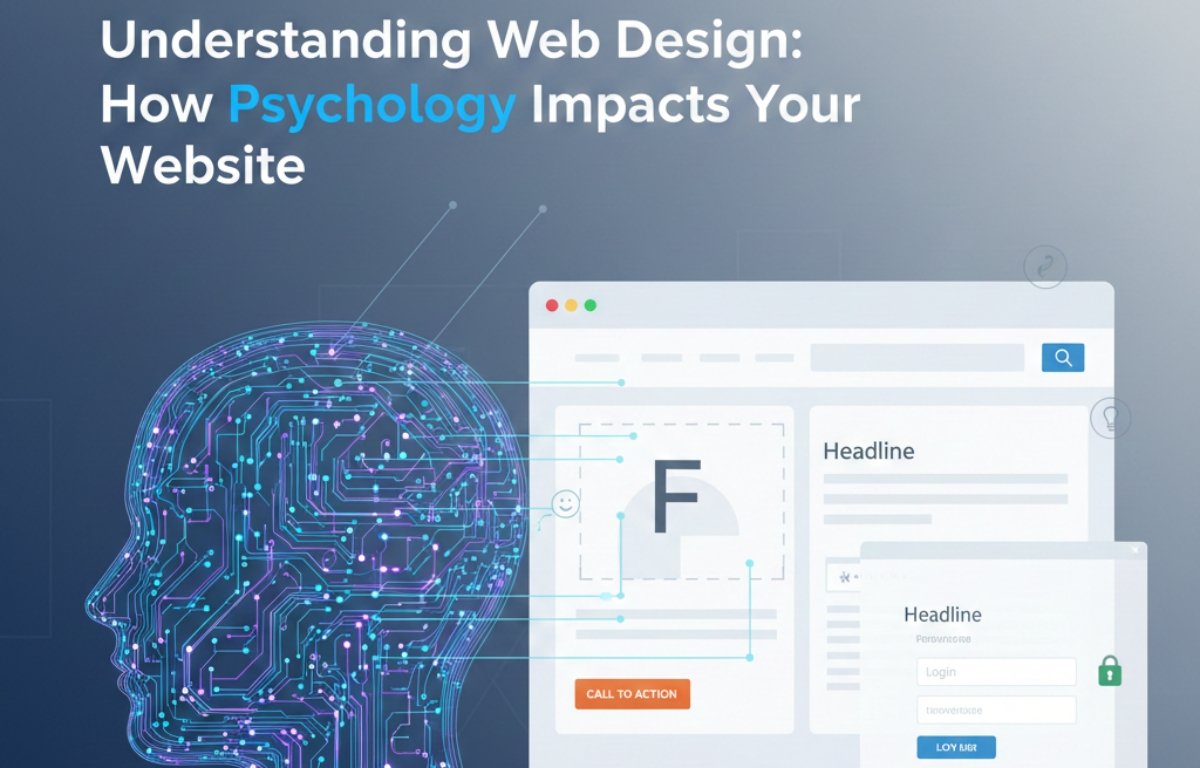
∙ Learn how human psychology influences user behavior online
∙ Understand why design choices affect trust, engagement, and conversions ∙ Improve user experience through psychology-driven web design
∙ Reduce bounce rates and increase time spent on your website
∙ Create websites that connect emotionally and drive action
The Connection Between Psychology and Web Design
Web design is not just about aesthetics or technical structure—it is deeply connected to human psychology. Every color, layout, font, and interaction influences how users feel and behave when they visit a website. Understanding psychological principles helps designers create websites that feel intuitive, trustworthy, and engaging.
When a website aligns with how users think and process information, it becomes easier to navigate and more enjoyable to use. Psychological web design focuses on reducing friction, guiding attention, and encouraging desired actions. This approach improves user satisfaction and directly impacts conversions, retention, and brand perception.
First Impressions and the Power of Visual Perception
First impressions are formed within seconds of landing on a website. During this short time, users subconsciously judge credibility, professionalism, and relevance based on visual cues.
Clean layouts, balanced spacing, and consistent branding create a sense of trust and order. Visual clutter or outdated design can overwhelm users and cause them to leave quickly. By understanding how the brain processes visual information, designers can structure pages that immediately feel reliable and welcoming.
Color Psychology and Emotional Response
Colors play a powerful role in shaping emotions and behavior. Different colors trigger different psychological responses, which can influence how users perceive a brand and interact with a website.
For example, blue often conveys trust and stability, making it popular for corporate and financial websites. Red can create urgency and excitement, while green is associated with calmness and growth. Choosing the right color palette helps guide user emotions and supports the overall message of the website.
Typography and Readability Psychology
Typography affects both readability and emotional tone. Fonts influence how users perceive information, whether it feels formal, friendly, modern, or authoritative.
Simple, readable fonts reduce cognitive load and make content easier to consume. Proper line spacing, font size, and contrast improve comprehension and reduce eye strain. When users can read content comfortably, they stay longer and engage more deeply with the website.
Layout, Structure, and Cognitive Load
Cognitive load refers to the mental effort required to process information. Websites with complex layouts or confusing navigation increase cognitive load, leading to frustration and abandonment.
Psychology-driven web design focuses on clear hierarchy, predictable navigation, and logical content flow. Breaking information into sections, using headings, and guiding users step by step makes the experience more intuitive. Lower cognitive load improves usability and encourages users to complete actions.
The Role of Visual Hierarchy in Guiding Attention
Visual hierarchy determines where users look first and how they move through a page. The human eye naturally follows patterns, such as scanning from top to bottom and left to right.
By using size, color, contrast, and spacing, designers can direct attention to important elements like headlines, calls to action, and key messages. A strong visual hierarchy helps users find information quickly and reduces decision fatigue.
Trust Signals and Psychological Safety
Trust is a critical psychological factor in web design, especially for ecommerce and service based websites. Users need to feel safe before sharing personal information or making purchases.
Trust signals such as testimonials, reviews, security badges, clear contact information, and transparent policies reassure users. A website that feels honest and secure reduces anxiety and increases confidence, leading to higher conversion rates.
The Psychology of Navigation and User Control
Users feel more comfortable when they feel in control of their experience. Confusing navigation or hidden options create stress and frustration.
Clear menus, familiar icons, and consistent navigation patterns align with user expectations. Breadcrumbs, search bars, and clear back options support user control. When users can easily find what they need, they are more likely to stay and explore further.
Emotional Design and User Engagement
Emotional design focuses on creating positive feelings through visuals, interactions, and storytelling. Websites that evoke emotions are more memorable and engaging.
Micro-interactions, animations, and friendly language add personality to a website. Emotional connection increases brand recall and encourages users to return. Designing for emotion helps transform functional websites into meaningful digital experiences.
The Psychology Behind Calls to Action
Calls to action guide users toward specific behaviors, such as signing up, purchasing, or contacting a business. Psychology plays a key role in how effective these prompts are.
Clear, action-oriented language reduces uncertainty. Placement, color contrast, and urgency influence click behavior. When calls to action feel natural and reassuring rather than pushy, users are more likely to respond positively.
Social Proof and Behavioral Influence
Humans are influenced by the actions and opinions of others. Social proof leverages this psychological tendency to build trust and credibility.
Displaying customer reviews, ratings, case studies, and user counts reassures visitors that others have had positive experiences. Social proof reduces perceived risk and helps users feel confident in their decisions.
Consistency and Familiarity in Design
The human brain prefers familiarity and predictability. Consistent design elements reduce confusion and help users learn how to interact with a website quickly.
Using consistent colors, fonts, layouts, and interaction patterns creates a cohesive experience. Familiar design patterns align with existing mental models, making websites easier to use and more comfortable for visitors.
Accessibility and Inclusive Design Psychology
Accessible design considers the psychological and physical needs of all users. Websites that are inclusive create positive experiences for users with different abilities and preferences.
Clear contrast, readable fonts, keyboard navigation, and descriptive labels support accessibility. Inclusive design not only improves usability but also communicates empathy and respect, strengthening brand perception.
Reducing Friction and Decision Fatigue
Too many choices can overwhelm users and lead to decision fatigue. Simplifying options helps users move forward with confidence.
Psychological web design focuses on minimizing distractions, highlighting key options, and guiding users toward clear outcomes. Reducing friction improves flow and increases the likelihood of conversions.
Measuring User Behavior and Continuous Improvement
Understanding psychology is an ongoing process. User behavior data provides insights into how design choices affect actions and emotions.
Heatmaps, session recordings, and analytics reveal where users click, scroll, or drop off. Continuous testing and optimization ensure that design decisions remain aligned with user psychology and evolving expectations.
Conclusion
Understanding how psychology impacts web design allows you to create websites that feel intuitive, trustworthy, and engaging. By applying principles such as visual hierarchy, emotional design, trust signals, and cognitive load reduction, you align your website with how users naturally think and behave. When design decisions are rooted in psychology, websites not only look better but also perform better—driving higher engagement, stronger connections, and lasting success.